
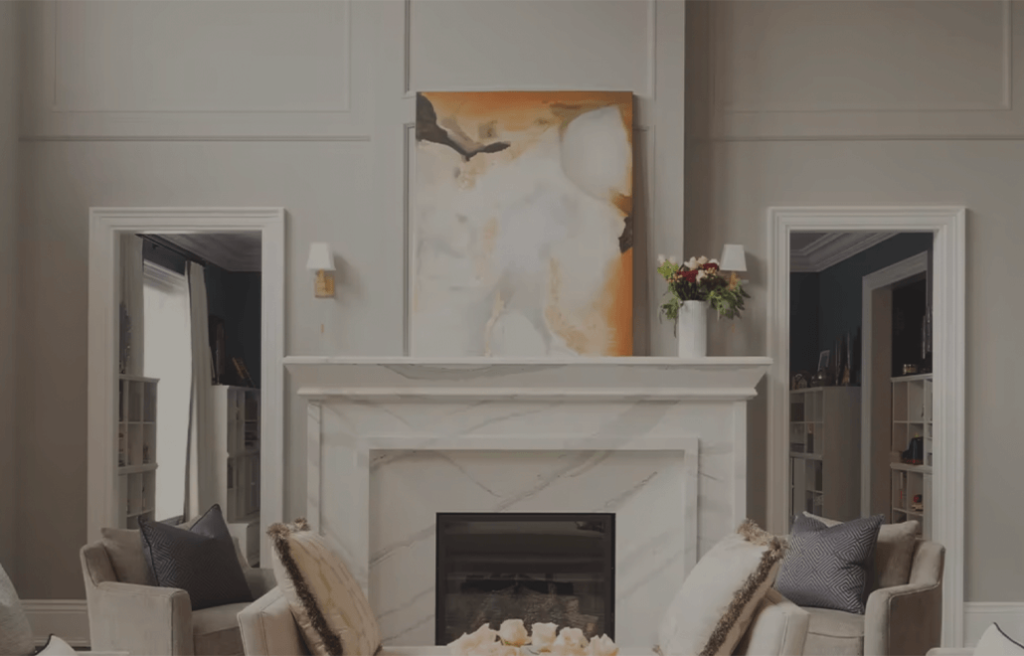
Fireplace surrounds and range hoods are where a kitchen or living room gets its focal point, and both are increasingly done in slab material rather than tile or plaster. Arlington Marble fabricates and installs fireplace surrounds, hearths, full-height fireplace walls and range hoods in natural stone, quartz, porcelain and sintered stone from its facility in Fort Worth for projects across Dallas-Fort Worth and North Texas.
The two share more than a page. The same questions apply to both: which material can take the heat, how the pieces are supported, how the veining will read on a vertical surface, and whether a fluted or textured finish is part of the design.

| Material | Suitability | What to know |
|---|---|---|
| Porcelain and sintered stone (Dekton, Lapitec) | Excellent | High heat resistance and large formats for full-height walls with few seams. Edges at the firebox opening are mitered or finished per the design. |
| Quartzite | Very good | Natural stone that handles heat well; dramatic veining for bookmatched walls. |
| Marble and dolomite | Very good | The traditional fireplace stone. Veining and a honed finish suit surrounds and hearths. Will patina near the firebox with use. |
| Granite | Very good | Durable and heat tolerant; a strong choice for hearths. |
| Quartz | Limited | Resin-bound quartz is not recommended where it will be exposed to sustained heat. Some manufacturers allow it at a distance from the firebox opening; we check the specific product's guidance and recommend another material where it does not qualify. |
Porcelain and sintered stone (Dekton, Lapitec)
Excellent
High heat resistance and large formats for full-height walls with few seams. Edges at the firebox opening are mitered or finished per the design.
Quartzite
Very good
Natural stone that handles heat well; dramatic veining for bookmatched walls.
Marble and dolomite
Very good
The traditional fireplace stone. Veining and a honed finish suit surrounds and hearths. Will patina near the firebox with use.
Granite
Very good
Durable and heat tolerant; a strong choice for hearths.
Quartz
Limited
Resin-bound quartz is not recommended where it will be exposed to sustained heat. Some manufacturers allow it at a distance from the firebox opening; we check the specific product’s guidance and recommend another material where it does not qualify.
Clearances to combustibles and the distance any material must keep from the firebox opening are set by the fireplace manufacturer’s installation requirements and local code. We fabricate to those requirements, which the builder confirms for the specific unit.
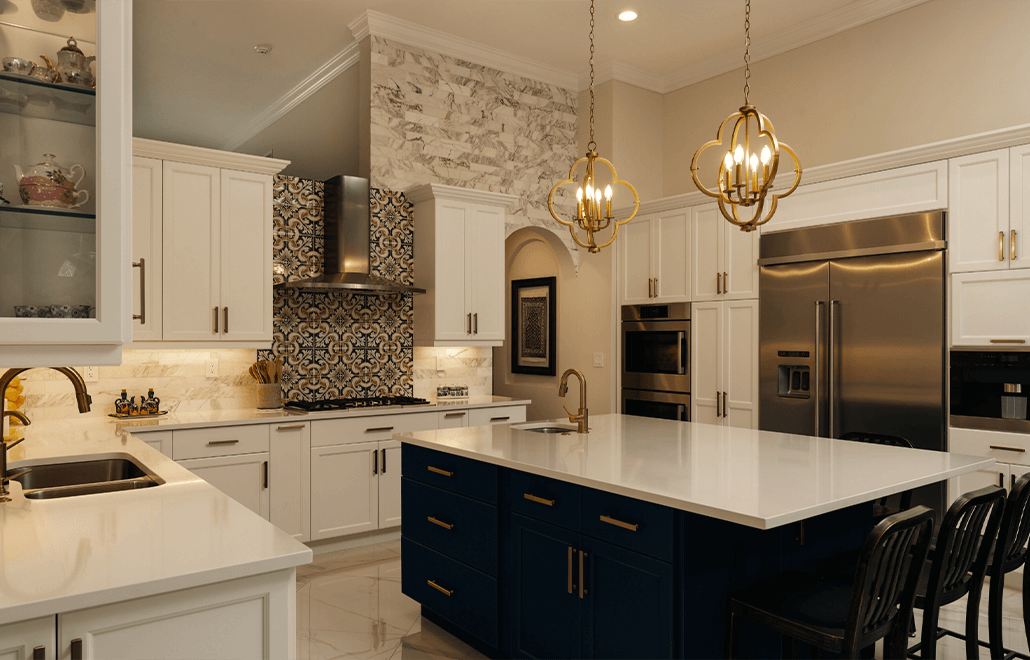
A stone or porcelain range hood is a hood body, usually framed and vented by the builder or hood manufacturer, clad in slab material cut and mitered to fit. We fabricate:
Porcelain and sintered stone are the most practical choices for hoods because thin, light panels are easier to support and the materials tolerate the heat and grease environment above a range. Marble, quartzite and quartz are also used; weight and support become the deciding factors, which is why we review hood framing with the builder before fabrication. Manufacturer guidance on the distance between the cooking surface and quartz applies here as well.
Support methods, panel sizes and edge details are resolved for the specific project rather than published as standards.
Porcelain, sintered stone, quartzite, marble, dolomite and granite are all used for surrounds and hearths. Quartz is limited near heat. The fireplace manufacturer’s clearance requirements determine how close any material can be to the firebox opening.
Often, yes, with large-format porcelain or sintered stone, or with natural stone slabs vein matched or bookmatched across two or three panels. The layout rendering shows where the seams will fall.
Yes. The hood body is framed by the builder or supplied by the hood manufacturer, and we clad it in slab material cut and mitered to fit. Thin porcelain and sintered stone are the easiest to support; natural stone is used with attention to weight and framing.
Yes. A full-height backsplash and hood can be laid out as one composition so the veining runs from the countertop to the ceiling.
Yes. Fluted and textured finishes are a frequent request on both. Profiles and materials are reviewed per project.
No. Framing, support and venting are provided by the builder, fireplace installer or hood manufacturer. We give them the stone’s dimensions and weight so they can build for it, and we confirm conditions before templating.
Send the elevation, the appliance or fireplace specification and the material direction. We will confirm the material, work out the support with your builder and show you the layout before cutting.