
An integrated sink is a sink fabricated from the same slab material as the countertop, so the basin and the top read as one piece. A floating vanity is a stone top, often with an integrated sink, mounted to the wall with no visible cabinet or legs beneath it. Arlington Marble fabricates both at its facility in Fort Worth for projects across Dallas-Fort Worth and North Texas.
We can make integrated sinks from most materials. The style of the sink is adjusted to suit the material, which is the most important thing to understand before choosing one. This page explains how.
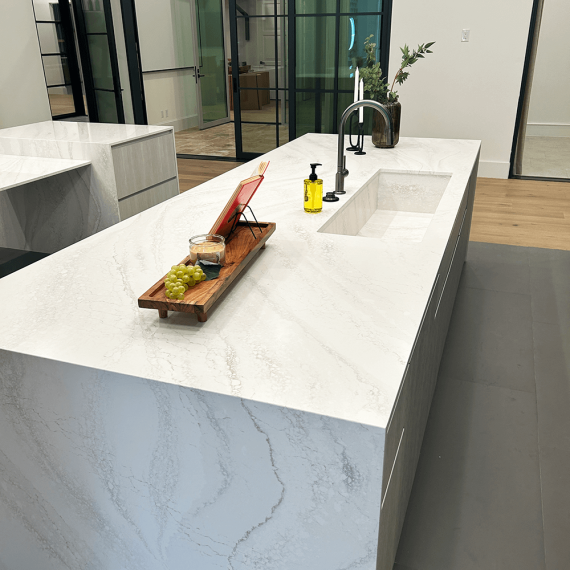
Instead of dropping a manufactured sink into a cutout, the basin is built from the slab. Depending on the material and the design, that is done by assembling slab pieces into a basin and finishing the joints, by shaping the basin from the material, or by a combination of the two. The result is a sink with no rim, no undermount lip and no change of material between the counter and the bowl.
Integrated sinks appear most often in bathroom vanities and powder rooms, where the sink is a visual feature, and increasingly in kitchens and bars where a long trough-style basin is wanted.
Most of the materials we fabricate can be made into a sink. What changes is the style of sink that suits each one.
| Material | Integrated sink suitability | How the sink style adapts |
|---|---|---|
| Quartz | Very good | Consistent color and no veining to interrupt, so assembled basins with crisp, square geometry look clean. Non-porous and easy to live with. Some quartz lines have manufacturer limits for sink fabrication, which we confirm per color. |
| Porcelain and sintered stone | Good, design dependent | Thin slabs and surface patterns mean the basin design works around the material's thickness and the way edges are mitered. Excellent for durability and cleaning. |
| Marble and dolomite | Very good for the look | The traditional material for carved and assembled stone basins. Veining can be carried into the bowl. Requires sealing and gentle care, and will patina with use. |
| Quartzite | Good | Hard and durable with natural veining; some quartzites are porous and need sealing. We assess the specific slab. |
| Granite | Good | Durable and sealable; well suited to utility, outdoor and bar sinks. |
| Soapstone and other specialty stones | Case by case | Reviewed for the specific design. |
Quartz
Very good
Consistent color and no veining to interrupt, so assembled basins with crisp, square geometry look clean. Non-porous and easy to live with. Some quartz lines have manufacturer limits for sink fabrication, which we confirm per color.
Porcelain and sintered stone
Good, design dependent
Thin slabs and surface patterns mean the basin design works around the material’s thickness and the way edges are mitered. Excellent for durability and cleaning.
Marble and dolomite
Very good for the look
The traditional material for carved and assembled stone basins. Veining can be carried into the bowl. Requires sealing and gentle care, and will patina with use.
Quartzite
Good
Hard and durable with natural veining; some quartzites are porous and need sealing. We assess the specific slab.
Granite
Good
Durable and sealable; well suited to utility, outdoor and bar sinks.
Soapstone and other specialty stones
Case by case
Reviewed for the specific design.
The basin shape, the drain, the overflow (if required) and the way the basin meets the top are all decided for the specific project. If a material is not a good fit for the sink you have in mind, we will say so and suggest the closest alternative.

A floating vanity puts the stone top, with or without an integrated sink, on the wall with nothing visible beneath it. The design questions are how the top is supported, where the plumbing runs and how thick the front edge should read.
Support is planned with the builder or contractor during framing, because the blocking and the mounting method depend on the stone’s size, thickness and weight and on what the wall can carry. We review this at the drawing stage, not at installation. Mitered or built-up front edges give the top a thicker profile without the weight of a thicker slab.
We review feasibility, recommend the sink style for the material and come back with the approach and an estimate.

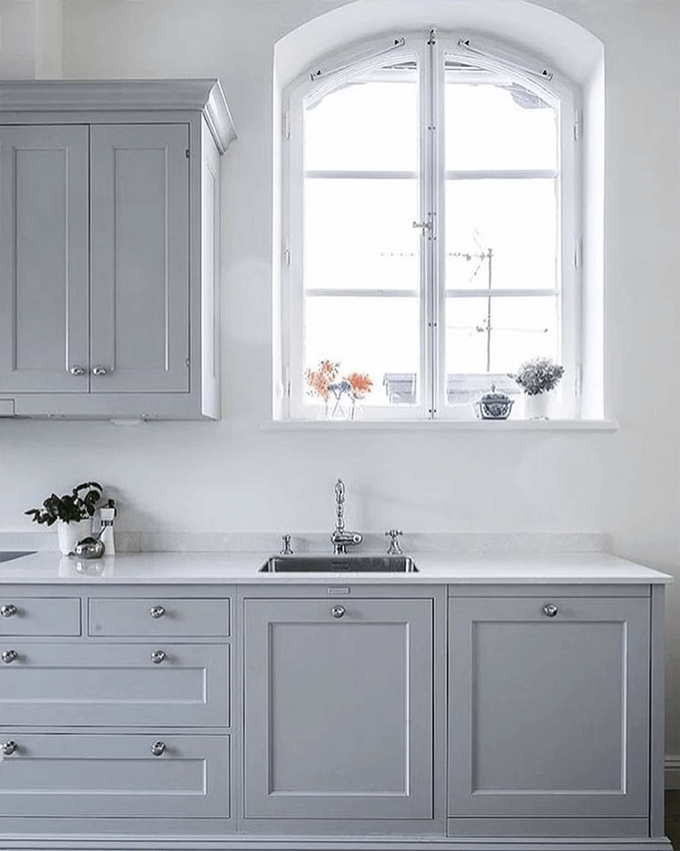
If the project needs a stainless kitchen sink or a standard undermount vanity sink rather than a custom stone basin, we stock a line that installs with any of our countertops.
In most cases, yes. We adjust the style of the sink to suit the material, so the basin design may differ between, say, a quartz vanity and a marble one. Send the material and the design and we will confirm.
They are made from the same material as the top with no rim or lip. Depending on the material and the construction, there may be finished joints where basin pieces meet; these are sealed and smoothed, and we show you where they fall before fabrication.
Yes, with a design that suits the slab’s thickness and surface pattern. Porcelain and sintered stone basins are durable and easy to clean.
As custom fabrication, per project, based on material, basin design and size. Send the design for an estimate.
Yes. Trough and single-basin kitchen sinks in quartz, sintered stone and natural stone are reviewed per project, with attention to depth, drain position and how the client uses the kitchen.

Send the drawing, the dimensions and the material you have in mind. We will tell you which sink style suits it and what it will take to build.